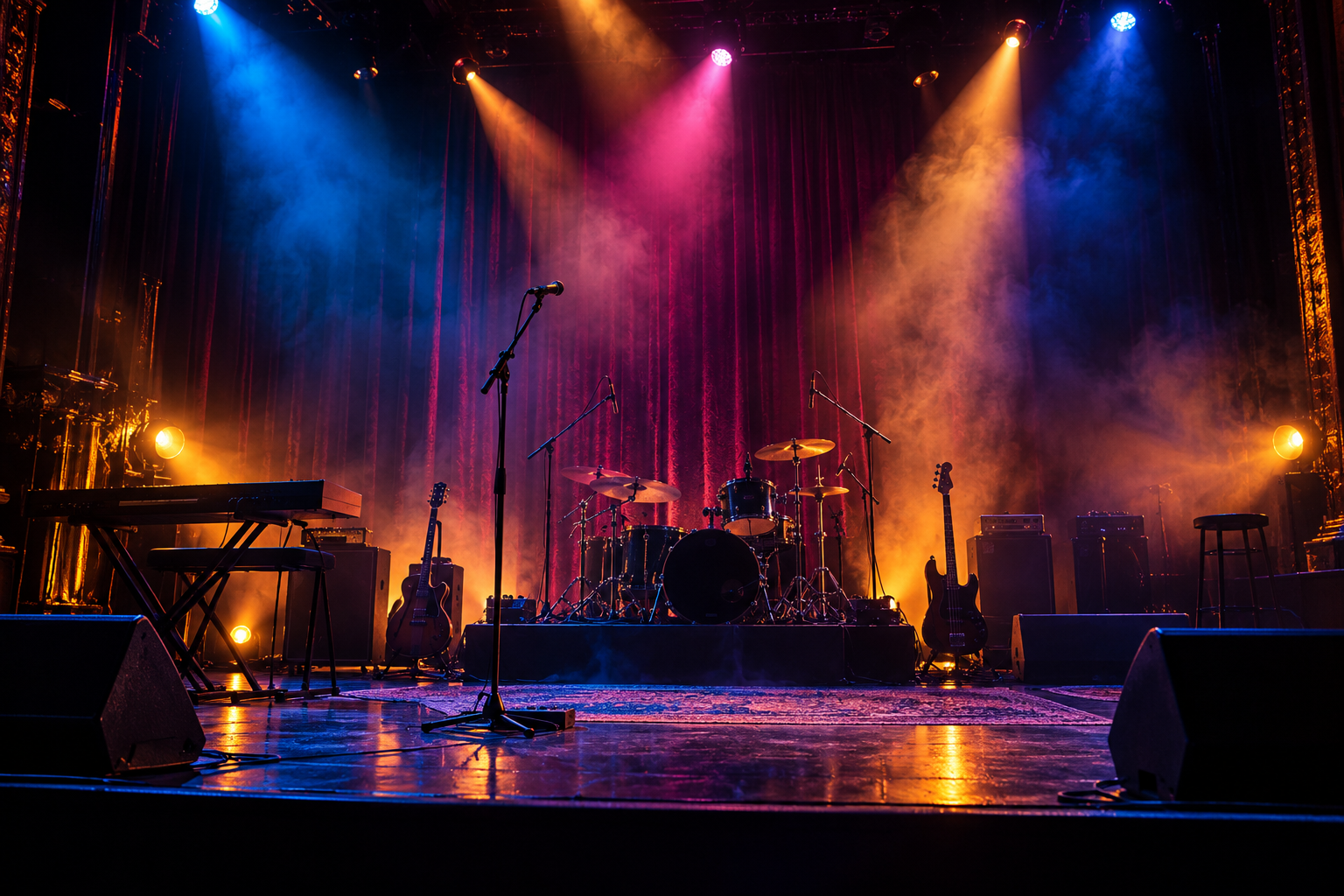
A recording can preserve a performance with remarkable detail. A live show offers something it cannot: uncertainty shared in the moment. A singer can leave space for the crowd, a band can stretch an arrangement, and a familiar song can feel different because of the room. The experience belongs partly to the people who came to hear it.
Set lists tell a story of their own. An opening song establishes the terms of the evening. A quiet stretch can bring the audience close before a louder finish releases the energy again. The decisions between songs matter as much as the hits: pacing, transitions, lighting, and the willingness to let a moment breathe.
Live music also depends on people whose names may not appear on the marquee. Sound engineers, lighting crews, venue staff, and touring teams shape what an audience hears and sees. A review that notices only the performer misses much of the craft. The room, its acoustics, and whether people can move and listen comfortably all affect the show.
A worthwhile concert review should describe what happened rather than assume that volume equals excitement. Did the performance reveal a new side of the songs? Did the musicians respond to one another? Was the production in service of the music? These observations give a reader more than a list of tracks.
The memory of a concert is often a small thing: a pause before the chorus, a room singing unexpectedly, or the moment a performer changes course. Such moments explain why, even with music always available on demand, people still gather to hear it happen once.